

New Chapter? New Team?
Time to reset how you work together.
Change brings new people, new dynamics and new possibilities. But a team doesn't automatically become a high-performing collective just because its structure, membership or objectives have changed.
Taking time to reconnect, understand one another and establish how you work best together can make all the difference.
Create the conditions for stronger relationships, better collaboration and collective performance.
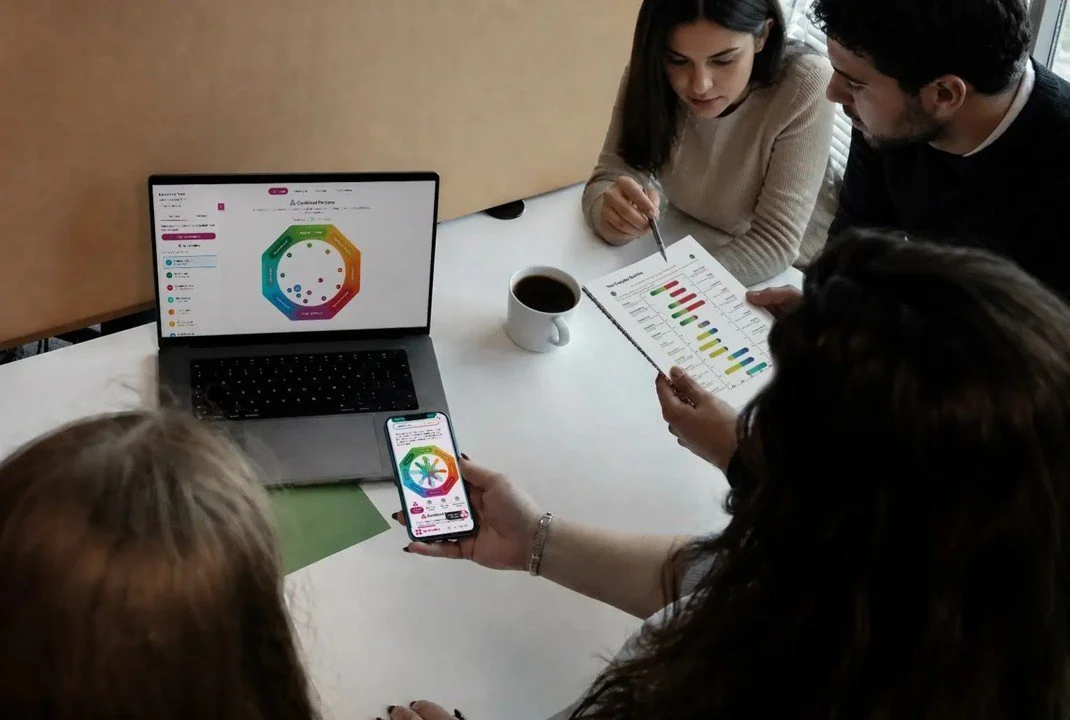
Understand the individuals. Strengthen the collective.
Whether you're bringing new people together, integrating different teams, navigating organisational change or entering a new phase of growth, the dynamics of a team inevitably shift.
People arrive with different experiences, expectations, strengths, working preferences and ways of approaching challenges.
Some relationships are already established. Others are still forming. Assumptions can go unchallenged, differences can create friction and individual potential can remain untapped.
And while everyone may be focused on delivering the work, there's often little time to step back and consider a more fundamental question:
Do we really understand each other – and how we can work best together?
This is where a team reset creates value.
Reset. Reconnect. Understand. Move forward together.
A team reset creates the space to step away from the day-to-day, look beyond roles and responsibilities, and develop a deeper understanding of the people behind them.
It's an opportunity to get to know one another more meaningfully – not just what people do, but who they are, what they bring, how they approach their work and how they respond when things get challenging.
Because effective collaboration starts with understanding.
And collective performance is strengthened when people recognise, appreciate and make the most of their differences.
What we explore:
Through a facilitated team experience, we explore the individual and collective dynamics that influence how a team works:
Individual qualities & strengths
Recognise the qualities, capabilities and perspectives each person brings, and where their potential can be better understood and utilised.
Preferences & working styles
Understand how people prefer to communicate, collaborate, make decisions and approach their work.
Behaviour under pressure
Explore how individuals respond when demands increase, uncertainty emerges or challenges arise – and what this means for the team.
Blind spots & potential risks
Surface assumptions, differences and patterns that may create friction, undermine trust or get in the way of effective collaboration.
Collective strengths & team dynamics
Understand the team as a whole: what it does well, where it may be vulnerable and how its collective strengths can be brought together.
The outcome: From individual understanding to collective performance.
The value isn't simply in knowing more about one another. It's in what the team does with that understanding.
When people have a clearer appreciation of themselves and their colleagues, they are better equipped to adapt, communicate, navigate differences and work through challenges together.
The experience helps teams to:
Build stronger relationships and mutual understanding.
Develop greater trust and appreciation of individual differences.
Communicate and collaborate more effectively.
Recognise and address potential sources of friction.
Make better use of individual strengths and collective capabilities.
Establish shared expectations for how they work together.
Create a stronger foundation for sustained team performance.
The ambition: a team that doesn't just work alongside one another, but understands how to work together.
For teams at a point of transition.
This experience is particularly valuable for:
Newly formed leadership and senior management teams.
Teams bringing together people from different functions or organisations.
Teams navigating restructuring, organisational change or new leadership.
Established teams experiencing changing dynamics or reduced cohesion.
Teams preparing for a new phase of growth, ambition or responsibility.
If the composition, context or expectations of your team have changed, it may be time to reset how you work together.